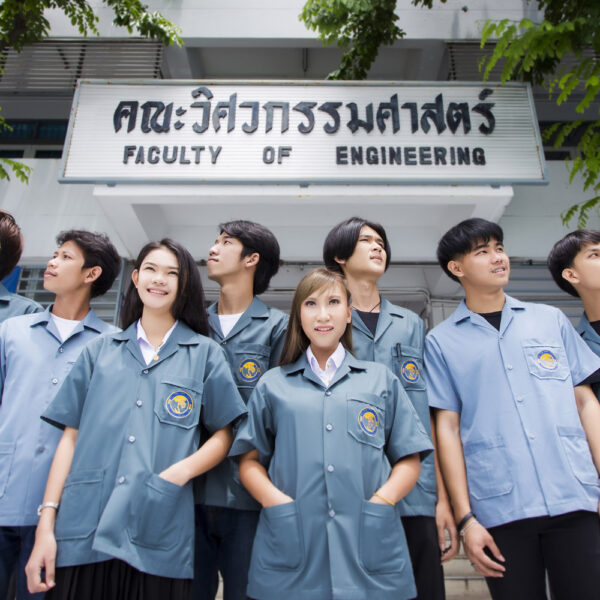
The Mechanical Engineering program aims to produce graduates with strong knowledge and abilities, continuous self-development, and the knowledge and readiness to pursue further studies at higher levels. Graduates will have practical skills and confidence in their work, good interpersonal relationships, and the ability to work effectively with others, along with professional ethics in the practice of engineering.
Program Highlights / Advantages
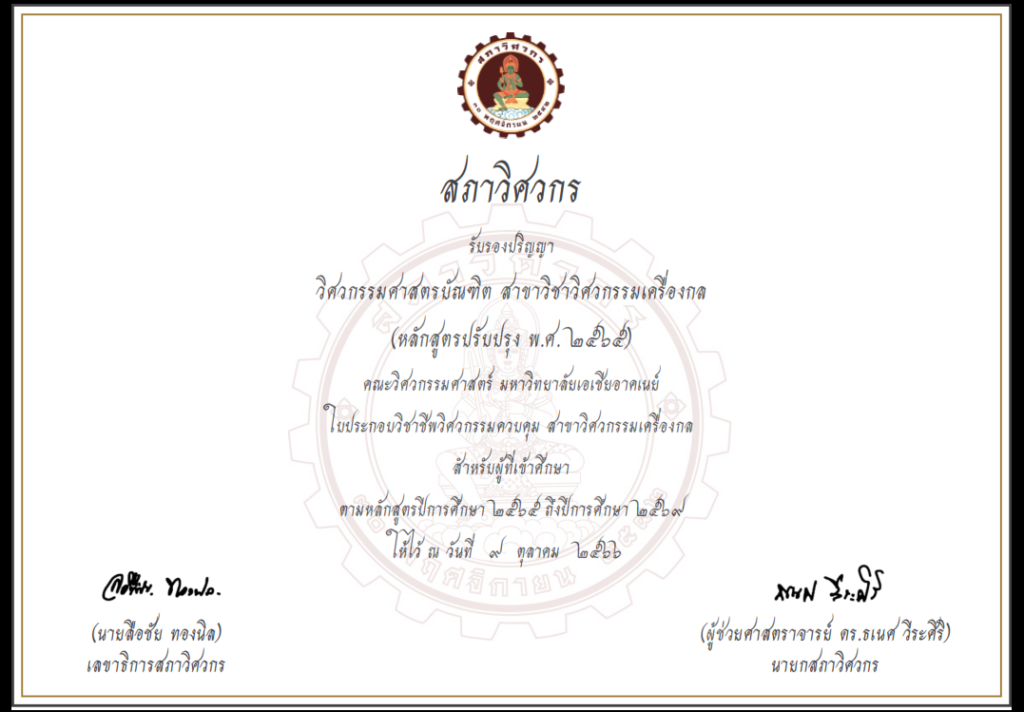
The program is accredited by the Council of Engineers; graduates are eligible to apply for a controlled engineering professional license (Mechanical Engineering).
The program’s faculty members are knowledgeable and capable, with recognized teaching experience and internationally recognized research work.
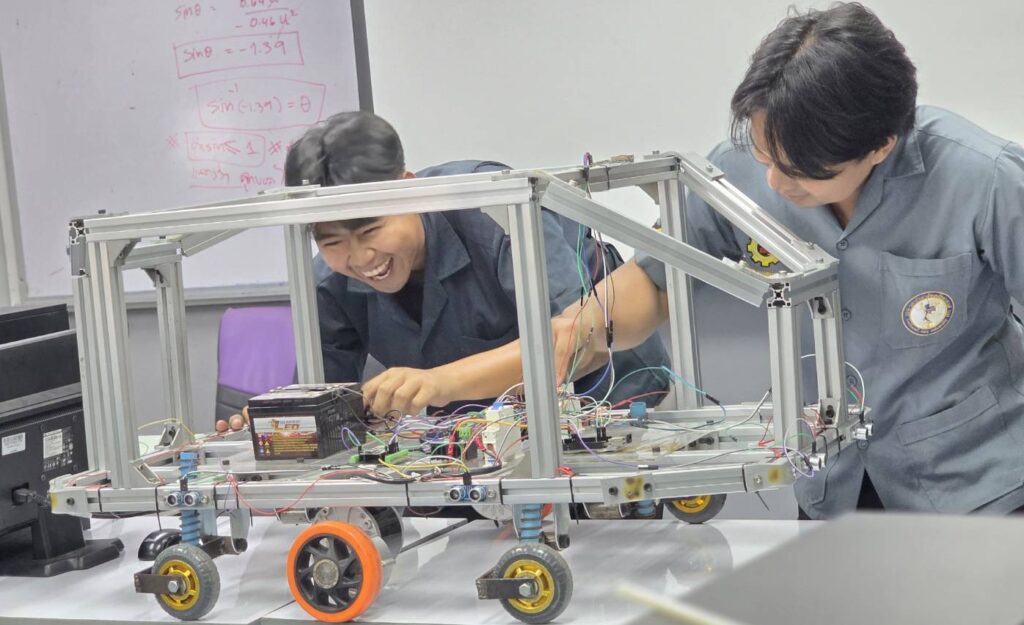
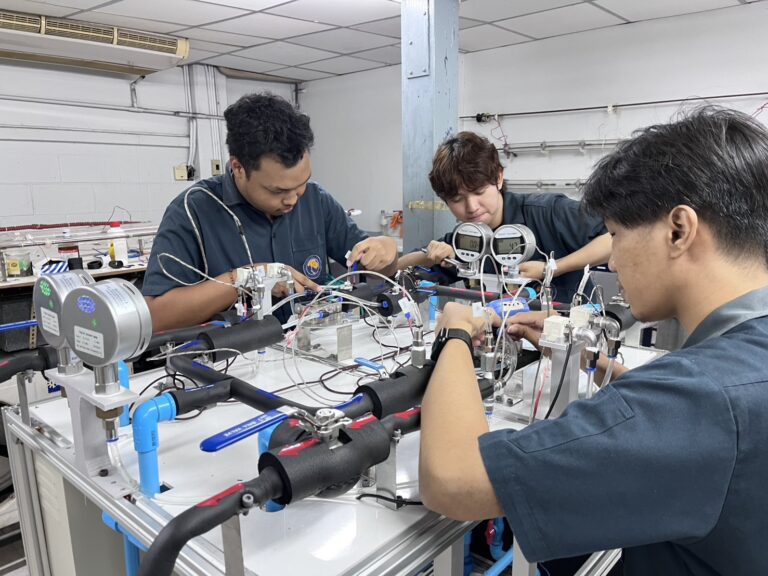
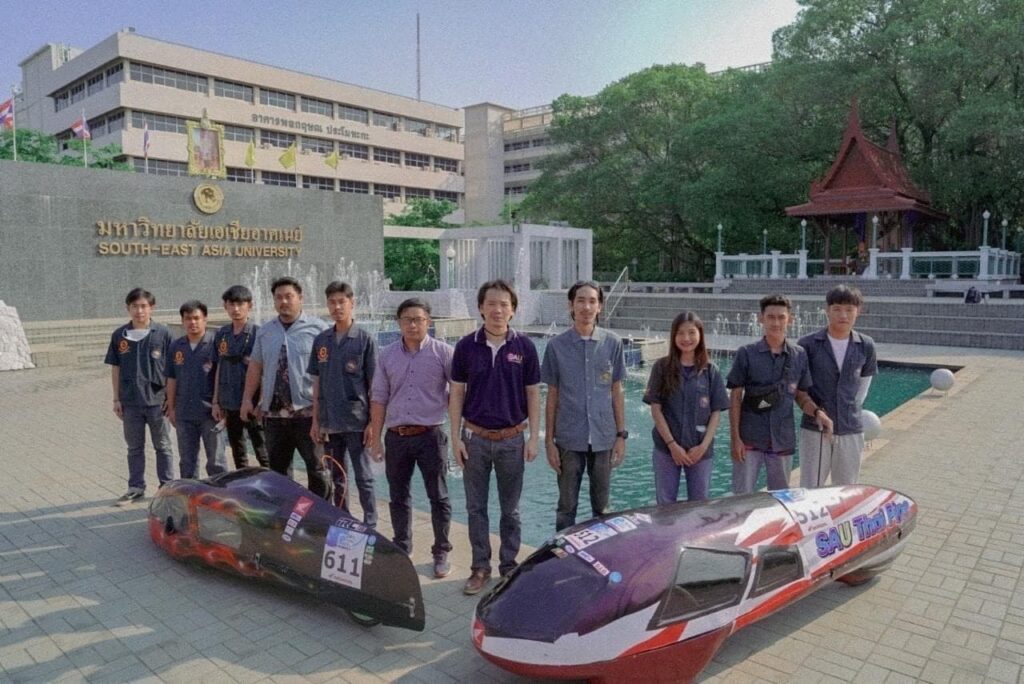
The program offers activities that promote learning outside the classroom, such as study visits and participation in academic or professional skill competitions.
The program has a network of collaborations with industrial sector organizations, enabling the exchange of knowledge and learning support between them.
The program has an advisory system in which faculty advisors provide guidance and closely, warmly look after students’ studies.
To produce graduates with sufficient knowledge and ability to practice in the field of mechanical engineering, such as thermal engineering, energy conservation, mechanical component design, and production planning and control.
To produce graduates with a solid foundation of knowledge and readiness to pursue further studies at the graduate level in various fields; graduates will also be able to conduct research and apply the knowledge gained from their studies to effectively develop their community or society.
To produce graduates suited to advances in mechanical engineering technology and aligned with current industry needs, in accordance with the objectives of the Faculty of Engineering’s curriculum development.
To meet the needs of graduates of upper secondary education or a higher vocational certificate (Vocational Certificate) or equivalent who have the potential to pursue studies in mechanical engineering.
To support government education policy that encourages private sector participation in providing education in fields where private universities are well prepared.
To meet the needs of graduates of upper secondary education or a higher vocational certificate (Vocational Certificate) or equivalent who have the potential to pursue studies in mechanical engineering.
To support government education policy that encourages private sector participation in providing education in fields where private universities are well prepared.
To promote and develop teaching and learning processes that keep pace with technological advancement in this era of borderless information and communication.
To promote and support research and development in mechanical engineering.
To produce graduates whose qualifications align with the learning standards set out in the education standards framework of the Office of the Higher Education Commission, so that graduates preserve arts and culture, uphold morality and ethics, and are able to continuously and sustainably develop themselves toward a life of sufficiency.
Career Opportunities
Graduates can pursue the careers listed, or other related careers, except those that require a professional license.
Mechanical Engineers can provide consulting, design and calculation, planning, and control of construction and production, inspection, operational oversight and maintenance of mechanical systems, thermodynamic systems, and machinery control systems in buildings and industry, as well as other related careers.
Researchers in mechanical engineering and other related fields, such as energy technology, automotive engineering and industrial robotics, agricultural engineering, food engineering, and production engineering.
Lecturers at educational institutions in science, engineering, and technology.